Part 2 cue cardCities and urban life
Describe a building you find interesting
Bullet two is where this card is won or lost: "it's very big and modern" says nothing. Give shape, material, colour and one detail you'd only notice up close. The last bullet then needs an idea about the building, not just "it's beautiful".
- 1 minute to prepare
- Up to 2 minutes
- Samples at Band 6, 7 and 8
- Updated 20 October 2026
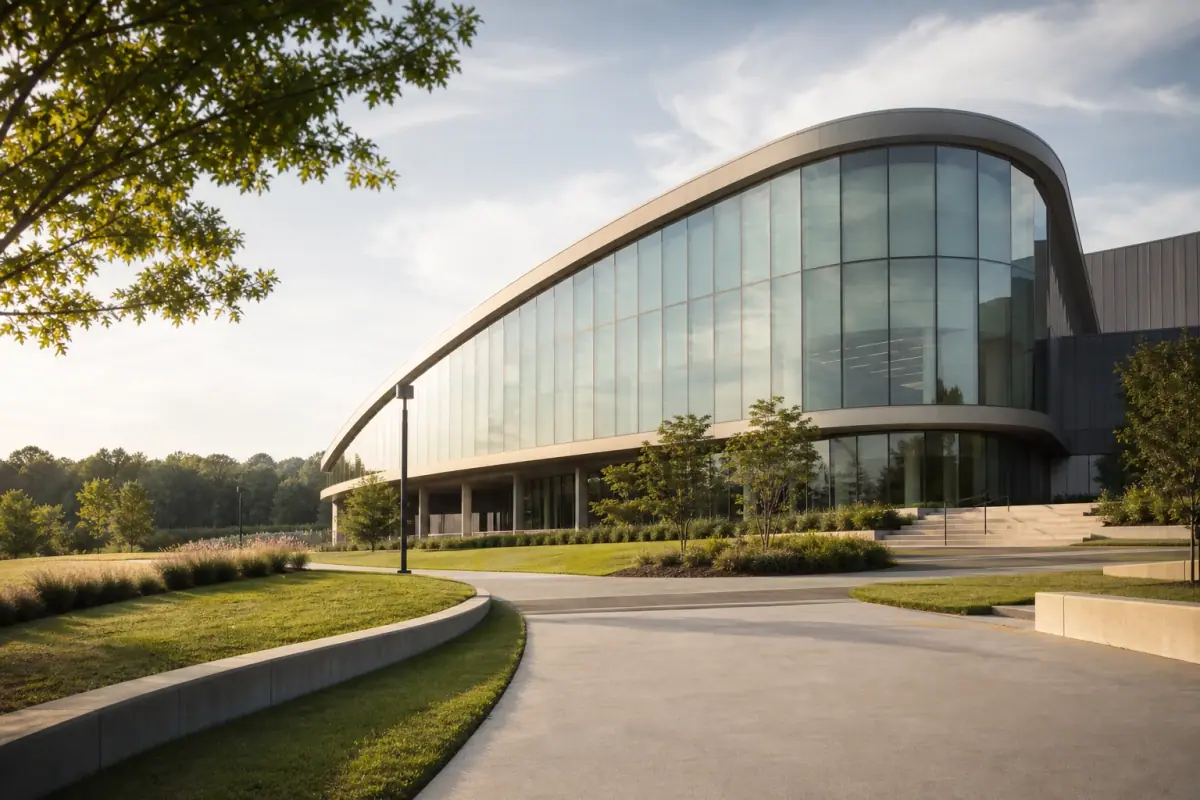
The cue card
Describe a building you find interesting.
You should say:
- what and where it is
- what it looks like
- what it is used for
- and explain why you find it interesting
Rehearse the long turn
1 minute to prepare · 2 minutes to speak
A 60-second plan
- what and where it isCopan building, central São Paulo
- what it looks likeS-shaped wave, concrete sunshades, 38 floors
- what it is used for1,000+ flats; cafés at street level
- and explain why you find it interestingvertical neighbourhood; aunt's lift rides
Sample answers
Band 6 sample answer
234 words · about 2:02 spoken at a Band 6 pace
I'd like to talk about a building called Copan, and it's in the centre of São Paulo, in Brazil. It was designed by Oscar Niemeyer, who is the most famous architect of our country, and it was finished in the sixties.
The building has a very special shape. It isn't straight like a normal building, it is curved like a wave or a letter S. All the front is covered with long white lines of concrete, and they are for protecting the flats from the sun. It has thirty-eight floors, so when you stand under it you need to put back your head to see the top.
It is mainly used for living. There are more than one thousand apartments, some of them very small, like only one room, and the bigger ones are at the other end. On the ground floor there are a lot of shops and cafés, and people who doesn't live there also come to eat or walk through it.
The reason I find it interesting is because it's like a small city in one building. My aunt has lived there since ten years, and when I visit her, I am always surprising how many different people are living together, students, old people, artists, families. She told me it has even its own postcode. For me it shows that a building can be more than just a place to sleep.
The mistakes that keep it at Band 6
- All the front is covered should be The whole front is covered
- put back your head should be tilt your head back
- people who doesn't live there should be people who don't live there
- interesting is because should be interesting is that
- lived there since ten years should be lived there for ten years
- I am always surprising should be I am always surprised
- it has even its own postcode should be it even has its own postcode
Why this is Band 6, not Band 7
- Fluency and coherence
- Willing to speak at length and covers all four bullets, with simple organisers ("The reason I find it interesting", "For me"). It stays at Band 6 because ideas are often strung together with commas rather than linked, as in the list "students, old people, artists, families".
- Vocabulary
- Enough to describe the building clearly ("curved like a wave", "architect", "ground floor"), with some attempts at precision. But "put back your head" is not natural, and the concrete sunshades are described rather than named. Band 7 would use less common items accurately.
- Grammar
- A mix of structures with relative and purpose clauses, but errors appear where the grammar is more complex: "since ten years" needs for, "people who doesn't live there" breaks agreement, and "I am always surprising" confuses the adjective form. That pattern is Band 6.
Pronunciation is the fourth criterion; it is judged from your voice, so a written sample cannot show it.
Band 7 sample answer
240 words · about 1:51 spoken at a Band 7 pace
The building I find most interesting is the Copan, a huge residential block right in the centre of São Paulo. It was designed by Oscar Niemeyer, probably Brazil's best-known architect, and finished in mid-sixties.
What makes it stand out is the shape. Instead of being a straight tower, it curves along the street like a giant wave, almost an S, and the whole facade is covered in thin horizontal strips of concrete that act as sunshades. From a distance they make the building look as if it's been drawn with a ruler. It's thirty-eight storeys high, so if you stand at the bottom, you have to crane your neck to see the top.
It's used almost entirely as housing. There are well over a thousand flats, ranging from tiny studios at one end to quite spacious apartments at the other, and on the ground floor there's a sort of covered street with cafés, a bookshop, a hairdresser and so on, which anyone can wander through.
What fascinates me, though, is the social side. My aunt has lived on the twentieth floor for about ten years, and every time I visit I'm struck by the mix of people in the lift: students, pensioners, musicians, young families. She claims the building even has its own postcode. It's basically a vertical neighbourhood, and it makes me think that good architecture isn't only about how something looks, but about how it brings people together.
The slips
- finished in mid-sixties should be finished in the mid-sixties
Why this is Band 7, not Band 8
- Fluency and coherence
- Speaks at length and moves between bullets with flexible signposting ("What makes it stand out", "What fascinates me, though"). Not Band 8 because the use bullet becomes a list ("cafés, a bookshop, a hairdresser and so on") rather than a picture of how people actually use the space.
- Vocabulary
- Less common, accurate items: "crane your neck", "sunshades", "a vertical neighbourhood", "I'm struck by the mix of people". Band 8 would show more of this range in the plainer parts, such as "quite spacious apartments".
- Grammar
- Frequent error-free complex sentences: a participle phrase ("ranging from tiny studios"), a conditional, present perfect with for, and a balanced contrast with "isn't only about". One slip, "finished in mid-sixties", which needs the article. That is Band 7.
Pronunciation is the fourth criterion; it is judged from your voice, so a written sample cannot show it.
Band 8 sample answer
270 words · about 1:52 spoken at a Band 8 pace
The building that's always fascinated me is the Copan, a vast apartment block in the old centre of São Paulo. It's one of Oscar Niemeyer's, and although it went up in the fifties and sixties, it still looks startlingly modern.
The first thing that strikes you is that it refuses to stand up straight. Rather than a conventional tower, it's a long, undulating ribbon of concrete that bends along the street in a gentle S. The entire facade is wrapped in slim horizontal sunshades, so from across the road it looks less like a building than a page of ruled paper. It's thirty-eight storeys tall, and standing at its base you genuinely have to crane your neck to take it in.
It's almost entirely residential, with well over a thousand flats, from shoebox studios at one end to generous family apartments at the other. At street level there's a curving arcade of cafés, a bookshop, a barber's and the like, and it's open to everyone, so half the neighbourhood uses it as a shortcut.
What really intrigues me, though, is the way it works as a community. My aunt has lived on the twentieth floor for a decade, and a single ride in the lift is like a cross-section of the city: students with guitars, retired couples, a nurse coming off a night shift. She swears it has its own postcode, and I've never bothered to check, because it certainly deserves one. To me it's proof that architecture can do more than shelter people; at its best, it puts them in each other's way, and that's where a neighbourhood begins.
Why this is Band 8, not Band 9
- Fluency and coherence
- Fluent and fully coherent, with each bullet given an image and the answer building to an idea ("at its best, it puts them in each other's way"). Short of Band 9 only because one or two transitions, like "What really intrigues me, though", are conventional.
- Vocabulary
- Wide and precise: "refuses to stand up straight", "undulating ribbon of concrete", "shoebox studios", "a cross-section of the city". Band 9 would sustain this flexibility in every stretch, including the factual opening.
- Grammar
- Flexible and accurate: a concessive clause ("although it went up in the fifties"), a comparative frame ("less like a building than a page of ruled paper"), a participle clause ("standing at its base"). No errors; the gap to Band 9 is the odd familiar structure.
Pronunciation is the fourth criterion; it is judged from your voice, so a written sample cannot show it.
Rounding-off questions
- What makes a building attractive?
- I think it's proportion and light more than decoration. A building that lets daylight in and sits comfortably next to its neighbours usually feels attractive, even if it's quite plain.
- Do you prefer modern or older buildings?
- Older ones, mostly, because they tend to have more character and better craftsmanship. That said, some modern buildings were radical in their day, and every old building was new once.
Phrases worth reusing
What makes it stand out
what makes it different from everything around it
crane your neck
stretch your neck to see something high up
a vertical neighbourhood
a whole community stacked in one tall building
I'm struck by
I notice something and it impresses me
The first thing that strikes you
what you notice immediately
a cross-section of the city
a mix of people who represent the whole city
take it in
see or absorb all of something
If the obvious answer doesn't fit
- A place of worship near you that you've never been inside
- An ugly or unusual building people in your city argue about
- Your school or office, if its design changes how people behave