Part 2 cue cardShopping and consumerism
Describe an item of clothing you like to wear
The bullets are simple, so the risk is finishing in a minute. "Where you got it" can carry a short story, and "why you like it" needs reasons beyond comfort: what it says about you, or a memory stitched into it. Describe fabric, colour and fit precisely.
- 1 minute to prepare
- Up to 2 minutes
- Samples at Band 6, 7 and 8
- Updated 20 October 2026
The cue card
Describe an item of clothing you like to wear.
You should say:
- what it is
- when you wear it
- where you got it
- and explain why you like it
Rehearse the long turn
1 minute to prepare · 2 minutes to speak
A 60-second plan
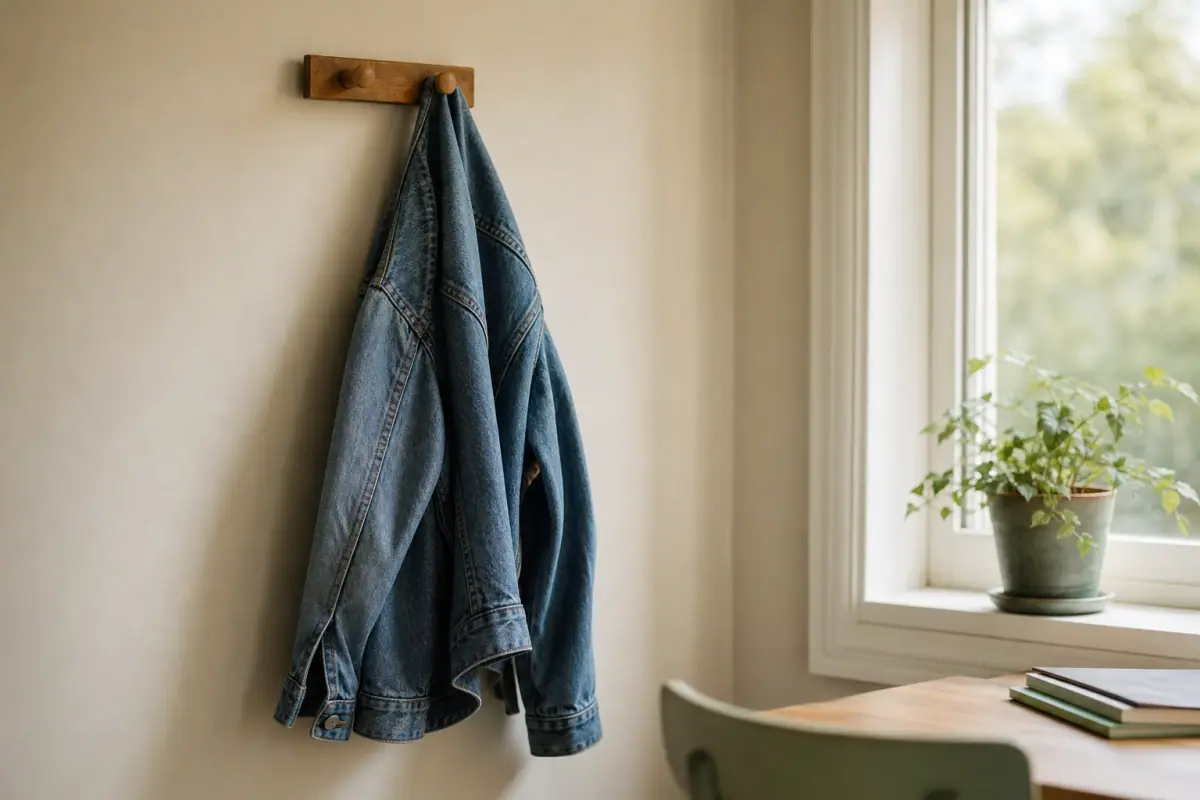
- what it isfaded denim jacket, previous owner's patches
- when you wear itspring and autumn; uni, weekends
- where you got itKoenji vintage shop, ¥3,000, first wages
- and explain why you like itits past; perfect fit; my own patch
Sample answers
Band 6 sample answer
233 words · about 2:02 spoken at a Band 6 pace
I want to talk about a denim jacket that I wear very often. It's quite old and the blue colour is faded, especially on the elbows. The interesting thing is there are some patches on it, which the person before me sewed, for example one with a small picture of Mount Fuji on the pocket.
I wear it mostly in spring and in autumn, because in Tokyo the summer is too hot and in winter it isn't enough warm. I wear it to university nearly every day in October, and also at the weekend when I meet my friends. But I don't wear it for formal situation, like job interviews.
I got it in a second-hand shop in Koenji, which is an area in Tokyo famous of vintage clothes. It was two years ago, and it was only three thousand yen. I remember it well because I bought it with the first salary from my part-time job in a convenience store, so I was very proud of me.
I like it because it has a history. Somebody wore it for many years before me, and I like to imagine who was he. Also, it fits me perfectly, and it goes with almost everything. Last year I sewed my own patch on the sleeve, a small cat, so now the jacket has two stories. I think it is more meaningful than buy new clothes.
The mistakes that keep it at Band 6
- it isn't enough warm should be it isn't warm enough
- for formal situation should be for formal situations
- famous of vintage clothes should be famous for vintage clothes
- with the first salary should be with my first wages
- very proud of me should be very proud of myself
- who was he should be who he was
- than buy new clothes should be than buying new clothes
Why this is Band 6, not Band 7
- Fluency and coherence
- Covers every bullet with enough to say, using simple links ("But", "Also", "so now"). It stays at Band 6 because the reasons in the last part are listed rather than connected, and the final sentence is a general opinion rather than a conclusion drawn from the story.
- Vocabulary
- Clear, relevant words ("faded", "patches", "vintage clothes", "sleeve"), and "goes with almost everything" is natural. But "the first salary" from a part-time job is the wrong word, and "famous of" misuses a preposition. Band 7 needs more precise, less common items.
- Grammar
- A mix of simple and complex sentences with relative clauses, but errors appear in the harder structures: "isn't enough warm" misplaces enough, "who was he" keeps question order, and "than buy new clothes" needs a gerund. That pattern is Band 6.
Pronunciation is the fourth criterion; it is judged from your voice, so a written sample cannot show it.
Band 7 sample answer
261 words · about 2:00 spoken at a Band 7 pace
The item of clothing I wear most is an old denim jacket. It's faded to a sort of pale, washed-out blue, a lot lighter at the elbows and the collar, and it's covered in patches that the previous owner sewed on, including a tiny embroidered Mount Fuji on the breast pocket.
I wear it mainly in spring and autumn, since Tokyo summers are far too humid for denim and in winter it's not nearly warm enough. In October I hardly take it off, at university and at weekends, although it's obviously not something I'd wear to a job interview.
I found it in a second-hand shop in Koenji, a neighbourhood in western Tokyo that's known for its vintage clothes shops. That was about two years ago, and it cost three thousand yen, which is nothing for a jacket. It was actually the first thing I bought with my own money, from a part-time job at a convenience store, so it felt like a bit of a milestone.
What I love about it is that it already had a life before me. I often wonder who wore it and where they went in it, and why they chose Mount Fuji of all things. It also happens to fit me perfectly, and it goes with nearly everything I own. Last year I added a patch of my own, a little black cat on the sleeve, so now the jacket's got two people's stories on it. I find that much more satisfying than buying something brand new that thousands of other people owns too.
The slips
- thousands of other people owns too should be thousands of other people own too
Why this is Band 7, not Band 8
- Fluency and coherence
- Speaks at length with flexible links ("What I love about it", "It also happens to"), and the story of the first wages gives the third bullet real weight. Not Band 8 because the final bullet's reasons are stacked rather than built into one idea.
- Vocabulary
- Some less common, precise items: "washed-out blue", "embroidered", "far too humid for denim", "a bit of a milestone", "of all things". Band 8 would show this precision more consistently.
- Grammar
- A good range: relative clauses, indirect questions ("who wore it and where they went in it"), a comparison with a gerund ("more satisfying than buying"). One agreement slip, "thousands of other people owns too". That is Band 7.
Pronunciation is the fourth criterion; it is judged from your voice, so a written sample cannot show it.
Band 8 sample answer
286 words · about 1:58 spoken at a Band 8 pace
The piece of clothing I reach for most is a battered old denim jacket. It's faded to the colour of a winter sky, almost white at the elbows and along the seams, and it's decorated with patches the previous owner stitched on by hand, my favourite being a tiny embroidered Mount Fuji on the breast pocket.
It comes out in spring and autumn; Tokyo summers are far too sticky for denim, and in January it's about as much use as a paper bag. By October I've more or less stopped taking it off, whether I'm at university or out with friends at the weekend, though I draw the line at job interviews.
I came across it in a cramped second-hand shop in Koenji, a neighbourhood in western Tokyo that's crammed with vintage clothes shops. That was two years ago, and it cost three thousand yen, which is less than a decent lunch for two. It also happened to be the first thing I ever bought with money I'd earned myself, after a month of night shifts at a convenience store, so it's tangled up with a feeling of being, for the first time, slightly independent.
What I love most is that it arrived with a past. I've spent an embarrassing amount of time wondering who sewed those patches and why, of all the mountains in Japan, they chose that one. It also fits as if it had been made for me, and it goes with practically everything I own. Last spring I added a patch of my own, a small black cat on the left sleeve, so the jacket now carries two people's histories. That feels far more personal than anything I could buy brand new.
Why this is Band 8, not Band 9
- Fluency and coherence
- Fluent and coherent, with each bullet given a precise picture and the first wages tied to a feeling ("tangled up with a feeling of being, for the first time, slightly independent"). Short of Band 9 only because "What I love most" is a predictable way into the final bullet.
- Vocabulary
- Wide and idiomatic: "the colour of a winter sky", "about as much use as a paper bag", "I draw the line at job interviews", "crammed with vintage clothes shops". Band 9 would sustain this precision in every sentence.
- Grammar
- Flexible and accurate: present perfect for change ("I've more or less stopped taking it off"), past perfect in a relative clause ("money I'd earned myself"), and an unreal comparison ("as if it had been made for me"). No errors; the gap to Band 9 is the odd safe structure.
Pronunciation is the fourth criterion; it is judged from your voice, so a written sample cannot show it.
Rounding-off questions
- How important is fashion to people your age?
- Very, though not always in the way older people think. A lot of my friends care more about having a personal style than following trends, which is partly why vintage shops have become so popular.
- Do people spend too much on clothes?
- Many do, mainly because fast fashion makes clothes so cheap that people buy without thinking. Spending more on fewer, better things, or buying second-hand, is kinder to your wallet and to the planet.
Phrases worth reusing
washed-out blue
a pale, faded shade of blue
a bit of a milestone
a small but important moment in your life
of all things
surprisingly, out of every possible choice
goes with nearly everything
matches most of your other clothes
I draw the line at
this is the limit of what I'll accept
tangled up with
closely connected with, often emotionally
If the obvious answer doesn't fit
- Traditional clothing you wear for festivals, weddings or prayers
- A school or work uniform you have mixed feelings about
- Something borrowed from a parent or sibling and never returned