Part 2 cue cardShopping and consumerism
Describe something valuable you lost
The marks are in "what you did about it": a sequence of actions in order, with time markers. Tense is the other trap: explaining how it was lost needs the past continuous and past perfect, not a string of past simples.
- 1 minute to prepare
- Up to 2 minutes
- Samples at Band 6, 7 and 8
- Updated 20 October 2026
The cue card
Describe something valuable you lost.
You should say:
- what it was
- how you lost it
- what you did about it
- and explain how you felt
Rehearse the long turn
1 minute to prepare · 2 minutes to speak
A 60-second plan
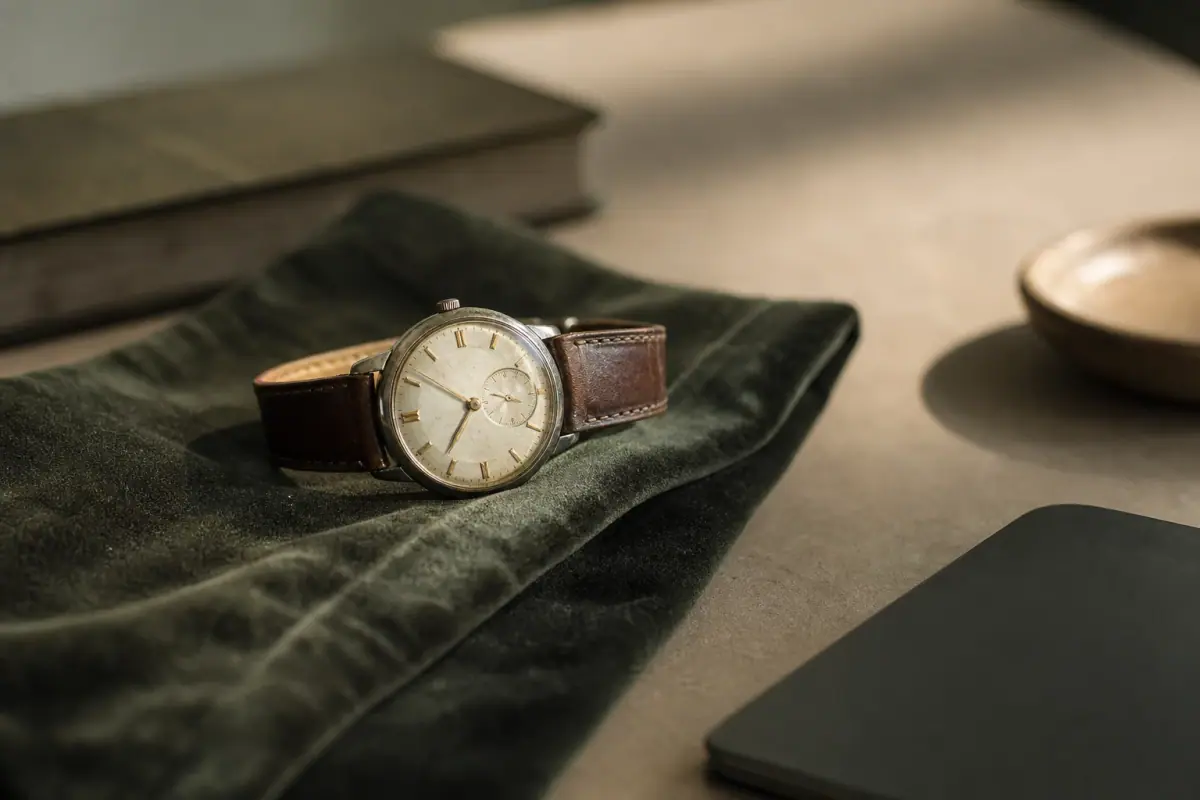
- what it wasgrandad's silver ring, initials inside
- how you lost itAin Sokhna, wrapped in napkin, binned
- what you did about ittorch, sand, beach bins, online post
- and explain how you feltsick, guilty; grandma's kind reaction
Sample answers
Band 6 sample answer
223 words · about 1:56 spoken at a Band 6 pace
I'm going to talk about a silver ring that I lost last summer. It was not very expensive, maybe a few thousand pounds, but for me it was very valuable because my grandmother gave it to me after I finished the secondary school. It belonged to my grandfather before, and it had his initials inside it.
I lost it in Ain Sokhna, it's a beach town near Cairo. I went there with my friends for a weekend. We were playing volleyball on the beach and I didn't want to damage the ring, so I take it off and wrap it in a paper napkin and put it next to our bags. Later my friend cleaned our place and he threw all the napkins into the rubbish, and the ring also.
When I realised, it was already night. I felt very panic. We took a torch and we searched in the sand for maybe two hours, and next morning I asked the hotel cleaners to let me look on the big bins. I also posted a message in a group for the town on Facebook, but nobody answered me.
I felt really guilty, especially when I must tell my grandmother. But she was very kind. She said the memory is more important than the silver. Still, I feel sad when I think about it.
The mistakes that keep it at Band 6
- after I finished the secondary school should be after I finished secondary school
- I take it off and wrap it should be I took it off and wrapped it
- my friend cleaned our place should be my friend tidied up our spot
- and the ring also should be and the ring went with them
- I felt very panic should be I panicked
- look on the big bins should be look in the big bins
- when I must tell my grandmother should be when I had to tell my grandmother
Why this is Band 6, not Band 7
- Fluency and coherence
- Keeps talking, answers each bullet in order, and the story is easy to follow. It stays at Band 6 because ideas are strung together with "and" ("take it off and wrap it in a paper napkin and put it"), so there is little sense of events building towards the moment of loss.
- Vocabulary
- Clear, everyday vocabulary with a few useful items ("initials", "torch", "guilty"), but form and collocation slip: "I felt very panic" uses the noun as an adjective, and "cleaned our place" is not how a spot on a beach is described. Band 7 would paraphrase more precisely.
- Grammar
- Attempts a past narrative with clauses of time and reason, but the tenses wobble where the story matters most: "I take it off and wrap it" drifts into the present, and "when I must tell" needs a past form. Errors are frequent but never block the meaning.
Pronunciation is the fourth criterion; it is judged from your voice, so a written sample cannot show it.
Band 7 sample answer
267 words · about 2:03 spoken at a Band 7 pace
Something valuable I lost, and I still feel a bit sick when I think about it, was a silver ring my grandmother gave me when I finished secondary school. It had belonged to my grandfather and it had his initials engraved on the inside, so although it wasn't worth much money, it was irreplaceable to me.
It happened last summer in Ain Sokhna, a seaside town about two hours from Cairo. I was there for the weekend with some friends from university, and before we started playing volleyball on the beach, I took the ring off because I was worried I'd scratch it. Stupidly, I wrapped it in a paper napkin and left it on top of my bag. While we were playing, one of my friends tidied up our spot and threw away all our rubbish, including, of course, the napkin.
I didn't notice until that evening, and by then it was dark. We went back down with our phone torches and combed through the sand for couple of hours, and the next morning I persuaded the hotel staff to let me go through the beach bins. I also put a post on a local community page, just in case someone had found it, but nothing ever came of it.
Honestly, the worst part was the guilt, and having to tell my grandmother. I'd been dreading it, but she took it remarkably well. She told me it was only metal and that my grandfather wouldn't want me upset over it, which helped, although I still check my pockets about ten times whenever I go anywhere now.
The slips
- for couple of hours should be for a couple of hours
Why this is Band 7, not Band 8
- Fluency and coherence
- Speaks at length with ease and keeps events in a clear order ("While we were playing", "by then it was dark", "the next morning"). Not Band 8 because the reflection at the end is added on rather than developed, and some linking ("I also", "Honestly") is fairly routine.
- Vocabulary
- Some less common, precise vocabulary: "irreplaceable", "combed through the sand", "nothing ever came of it", "I'd been dreading it". Band 8 would show that control throughout; "a bit sick" and "which helped" are safe, everyday choices.
- Grammar
- A wide range with frequent error-free sentences: past perfect ("It had belonged to my grandfather"), past continuous for the background ("While we were playing"), reported speech. One slip, "for couple of hours", which is missing its article.
Pronunciation is the fourth criterion; it is judged from your voice, so a written sample cannot show it.
Band 8 sample answer
268 words · about 1:51 spoken at a Band 8 pace
The thing I lost that mattered most to me was a plain silver ring. My grandmother gave it to me the summer I left secondary school; it had been my grandfather's, and his initials were still engraved inside the band, worn almost smooth after forty years. In terms of money it was worth very little, but sentimentally it was the most precious thing I owned.
I lost it through sheer carelessness. A group of us had driven down to Ain Sokhna on the Red Sea for a long weekend, and before a game of beach volleyball I slipped it off so it wouldn't get scratched. Rather than putting it somewhere sensible, I wrapped it in a napkin and tucked it under my towel. At some point a friend, trying to be helpful, gathered up all our rubbish and binned it, napkin and all.
It didn't dawn on me until after dinner. I went straight back with a torch and sifted through the sand until well past midnight, and at dawn I talked one of the cleaners into letting me rummage through the beach bins, which was about as unglamorous as it sounds. I even posted a description on the town's community page in case anyone had picked it up. Nothing turned up.
What I felt, more than anything, was guilt, as though I'd somehow let my grandfather down. Breaking the news to my grandmother was the part I'd been dreading, and she was wonderfully matter-of-fact about it: she said he'd have laughed at the whole thing. That softened the blow, but I've never quite shaken off the feeling.
Why this is Band 8, not Band 9
- Fluency and coherence
- Fluent and coherent throughout, with the loss, the search and the feeling each told as a scene, and a closing line that lands ("I've never quite shaken off the feeling"). Short of Band 9 because one or two links ("more than anything", "I even posted") are conventional rather than distinctive.
- Vocabulary
- Wide and idiomatic: "through sheer carelessness", "It didn't dawn on me", "napkin and all", "softened the blow", "matter-of-fact". Band 9 would show the same precision in the plainer sentences too, such as the opening description of the ring.
- Grammar
- A full range used accurately: past perfect for the background ("had driven down"), a participle clause ("trying to be helpful"), "Rather than putting", and a past conditional in reported speech ("he'd have laughed"). No errors; Band 9 is the same range with more varied sentence openings.
Pronunciation is the fourth criterion; it is judged from your voice, so a written sample cannot show it.
Rounding-off questions
- Why do people become attached to their belongings?
- Mostly because objects hold memories. A ring or an old jumper reminds us of a person or a period of our lives, so losing it can feel like losing a small piece of that memory.
- Do people own too many things today?
- Many people do, I think. Things are so cheap and easy to order that we buy without thinking, and then most of it sits in a cupboard. I'd rather have fewer things that actually mean something.
Phrases worth reusing
combed through the sand
searched an area very thoroughly
nothing ever came of it
it produced no result in the end
I'd been dreading it
I had been worried about it for some time
through sheer carelessness
only because I wasn't careful enough
It didn't dawn on me
I didn't realise it
napkin and all
including the napkin as well
softened the blow
made bad news easier to accept
If the obvious answer doesn't fit
- A document or card you lost, and the hassle of replacing it
- Something that went missing when you moved house, noticed months later
- Work you lost, such as files on a laptop that broke