Part 2 cue cardHealth and fitness
Describe a walk you enjoyed
"What you saw" is the descriptive bullet and it carries the vocabulary marks: specific nouns and sensory detail, not "beautiful nature". The trap is describing the route like directions; make "why you enjoyed it" about the people or the moment.
- 1 minute to prepare
- Up to 2 minutes
- Samples at Band 6, 7 and 8
- Updated 20 October 2026
The cue card
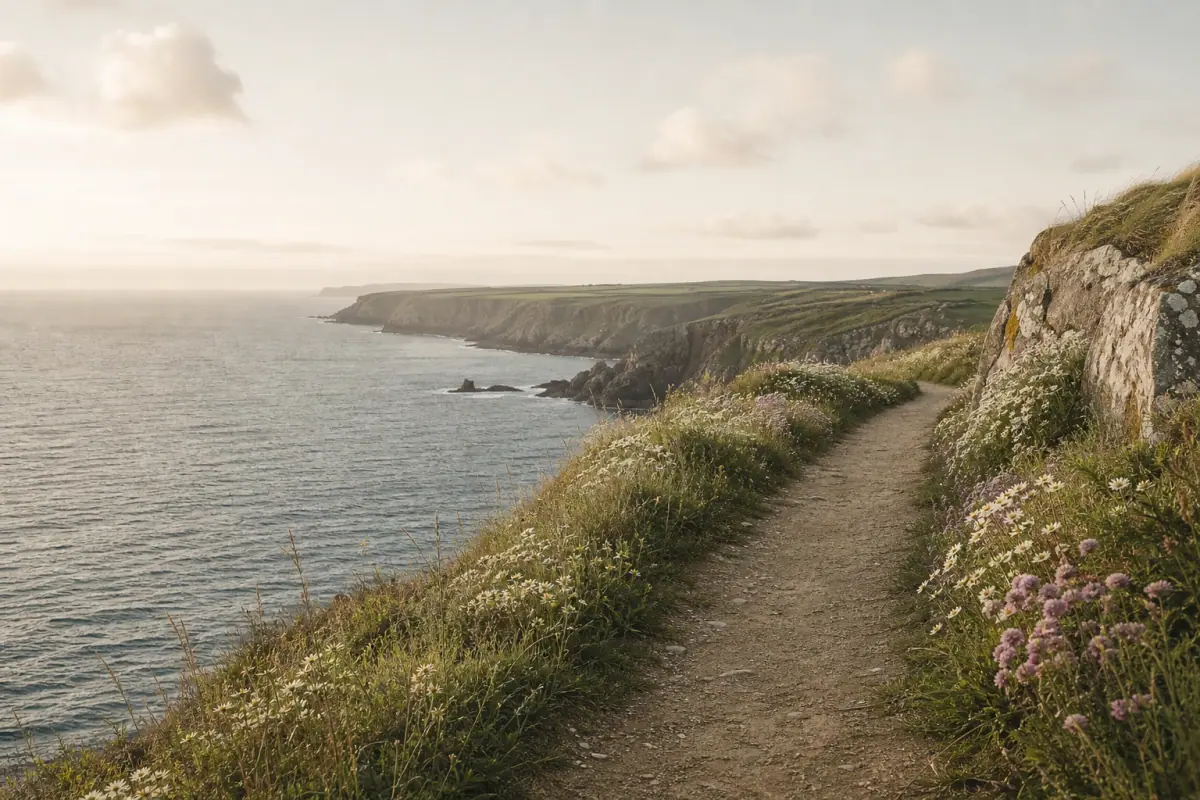
Describe a walk you enjoyed.
You should say:
- where you walked
- who you were with
- what you saw
- and explain why you enjoyed it
Rehearse the long turn
1 minute to prepare · 2 minutes to speak
A 60-second plan
- where you walkedEntoto hills above Addis, before dawn
- who you were withDad, first walk together in years
- what you sawrunners, eucalyptus, firewood, church, city below
- and explain why you enjoyed ithis student stories; just us two
Sample answers
Band 6 sample answer
221 words · about 1:55 spoken at a Band 6 pace
I'd like to describe a walk I did last December on Entoto, which is a mountain just on the north of Addis Ababa, my city. It's very high, nearly three thousand metres, so the air is quite cold and fresh, specially in the early morning.
I went with my father. Normally he is very busy with his work, and I am studying in Hawassa, so we don't see each other much. But I was at home for the holiday and one night he suddenly said, tomorrow we will walk to Entoto, so be ready at five thirty.
We started from the bottom when it was still dark. The road goes up through a big forest of eucalyptus trees, and the smell was very strong and nice. We saw many runners which were training on the hill, because a lot of famous Ethiopian athletes are practising there. We also passed some women carrying very big bundles of wood on their back. At the top there is an old church, and from there we could see the whole city under us, with the lights still on.
I enjoyed it because it was a rare chance to talk with my father. He told me many stories about when he was young, which I never heard before. It was the best morning of my holiday.
The mistakes that keep it at Band 6
- a walk I did last December should be a walk I went on last December
- just on the north of Addis Ababa should be just to the north of Addis Ababa
- specially in the early morning should be especially in the early morning
- runners which were training should be runners who were training
- athletes are practising there should be athletes train there
- bundles of wood on their back should be bundles of wood on their backs
- the whole city under us should be the whole city below us
- which I never heard before should be which I'd never heard before
Why this is Band 6, not Band 7
- Fluency and coherence
- Willing and easy to follow, with the walk told in order and a simple conclusion ("It was the best morning of my holiday"). It stays at Band 6 because the reason for enjoying it is stated in two sentences rather than developed, and the description relies on "and" and "also".
- Vocabulary
- Enough vocabulary for a clear picture ("eucalyptus trees", "bundles of wood", "athletes"), but much of it is safe ("very strong and nice", "very big"), and "a walk I did" is an awkward collocation. Band 7 needs less common words chosen precisely.
- Grammar
- A mix of sentence types, but errors appear in the more complex ones: "runners which were training" uses the wrong relative pronoun, "which I never heard before" needs a past perfect, and "are practising there" misuses the continuous. That is Band 6.
Pronunciation is the fourth criterion; it is judged from your voice, so a written sample cannot show it.
Band 7 sample answer
263 words · about 2:01 spoken at a Band 7 pace
The walk I'd like to talk about was up Entoto, the range of hills that rises just north of Addis Ababa. It's close to three thousand metres high, so even though it's barely twenty minutes from the city centre, it feels like a completely different climate up there, especially at dawn.
I went with my father, which was unusual in itself. He works long hours and I'm at university in Hawassa, so we hardly see each other. But last December, when I was home for the holidays, he announced at dinner that we were going to walk up Entoto the next morning and that we'd be leaving at half past five, no arguments.
We set off in the dark and climbed through thick eucalyptus forest, with that sharp, almost medicinal smell all around us. As it got lighter, we kept being overtaken by runners doing hill training, since the altitude makes it a favourite spot for athletes. We also passed women heading down the slope with enormous bundles of firewood on their backs, which made our little climb feel rather easy. At the top, by an old church, we stopped and looked back, and the whole city was spread out beneath us, with its lights still flickering.
What made it special was the conversation. Somewhere on the way up, my dad started telling me stories about his student days that I'd never heard, including how he'd met with my mother. It was the first time in years that it had been just the two of us, and I didn't want it to end.
The slips
- how he'd met with my mother should be how he'd met my mother
Why this is Band 7, not Band 8
- Fluency and coherence
- Speaks at length without effort, moving smoothly from the setting to the climb to the reason ("What made it special was the conversation"). Not Band 8 because the middle section is a list of sights joined by "We also" and "At the top" rather than one connected scene.
- Vocabulary
- Some less common, precise language: "almost medicinal smell", "overtaken by runners doing hill training", "spread out beneath us". Band 8 would sustain this precision throughout, including plainer phrases such as "which was unusual in itself".
- Grammar
- A good range of complex structures, mostly accurate: reported speech with "we'd be leaving", a passive after keep ("we kept being overtaken"), a past perfect. One slip: "met with my mother", where met needs no preposition.
Pronunciation is the fourth criterion; it is judged from your voice, so a written sample cannot show it.
Band 8 sample answer
273 words · about 1:53 spoken at a Band 8 pace
I'd like to describe a walk I took last December up Entoto, the ridge of hills that looms over the northern edge of Addis Ababa. It's nearly three thousand metres up, and although it's only a short drive from the city, the air there is noticeably thinner and colder, particularly before sunrise.
My companion was my father, which in itself made it out of the ordinary. Between his job and my studies in Hawassa, we rarely spend time together, so when he informed me over dinner that we'd be setting off at half past five the next morning, I knew better than to argue.
We started in near darkness, climbing through dense eucalyptus forest that gave off a sharp, almost medicinal scent. As the light came up, we were repeatedly overtaken by runners doing altitude training, gliding past us as if the gradient didn't exist, and we stepped aside for women carrying immense bundles of firewood down to the city, which put our own modest efforts firmly in perspective. By the time we reached the old church at the summit, the sun was just breaking through, and Addis lay spread out below us, the streetlights still glowing in the haze.
What I treasure about that morning, though, isn't the view. At some point on the climb my father, who's usually quite reserved, began telling me about his own student years, including the rather unromantic way he'd met my mother at a bus stop. I'd never heard any of it. Walking side by side seems to make it easier to talk than sitting face to face, and I suspect that's why he suggested it.
Why this is Band 8, not Band 9
- Fluency and coherence
- Fluent and coherent, with the sights woven into one moving scene and an ending that reflects on why the walk worked ("easier to talk than sitting face to face"). Band 9 would vary its transitions beyond the familiar "though" and "At some point".
- Vocabulary
- Wide and idiomatic: "looms over the northern edge", "I knew better than to argue", "put our own modest efforts firmly in perspective", "rather unromantic". The gap to Band 9 is the occasional conventional choice, such as "out of the ordinary".
- Grammar
- Flexible and accurate: reported speech ("we'd be setting off"), participle clauses ("gliding past us"), a relative clause dropped into the main clause, and a gerund subject ("Walking side by side"). No errors.
Pronunciation is the fourth criterion; it is judged from your voice, so a written sample cannot show it.
Rounding-off questions
- Why is walking good for people?
- It's exercise almost anyone can do, at no cost, and it's gentle on the body. But I think the mental side matters as much: walking clears your head, and, as I found, it makes conversation easier.
- Do people walk less than they used to?
- In Addis, probably yes. People used to walk everywhere, but now there are minibuses and ride-hailing apps, so many people only walk for exercise rather than to get somewhere.
Phrases worth reusing
spread out beneath us
all visible at once from above
I knew better than to argue
I was wise enough not to disagree
unusual in itself
unusual even before anything else happened
out of the ordinary
unusual, not part of everyday life
just the two of us
only us, with nobody else there
firmly in perspective
made it seem small by comparison
setting off
starting a journey
If the obvious answer doesn't fit
- An ordinary evening walk in your neighbourhood that turned memorable
- A walk around a city you were visiting for the first time
- A long walk you took alone to think something through