Part 2 cue cardNature and wildlife
Describe a beautiful natural place you have visited
The trap is the last bullet: repeating "beautiful" or "amazing" scores nothing. Explain what made it beautiful through the senses and the feeling it gave you (scale, colour, silence), and keep "what you saw and did" in the past.
- 1 minute to prepare
- Up to 2 minutes
- Samples at Band 6, 7 and 8
- Updated 20 October 2026
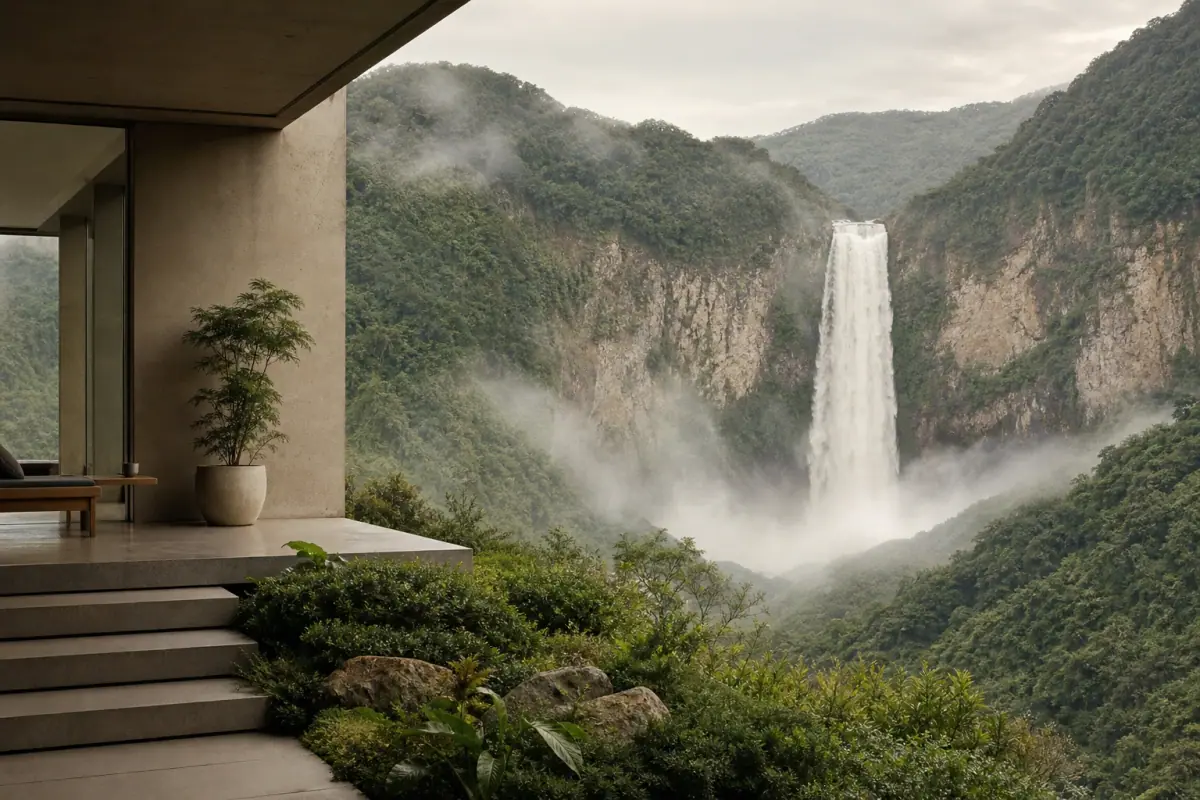
The cue card
Describe a beautiful natural place you have visited.
You should say:
- where it is
- when you went there
- what you saw and did
- and explain why you found it beautiful
Rehearse the long turn
1 minute to prepare · 2 minutes to speak
A 60-second plan
- where it isSalar de Uyuni, Bolivian altiplano
- when you went therelast February, rainy season, jeep tour
- what you saw and didmirror flat, flamingos, geysers, salt hotel
- and explain why you found it beautifulno horizon, total silence, felt tiny
Sample answers
Band 6 sample answer
234 words · about 2:02 spoken at a Band 6 pace
I'd like to describe the Salar de Uyuni in Bolivia. It's the biggest salt flat in the world and it is in the south-west of the country, very high in the mountains, more than three thousand and six hundred metres.
I went there in February last year with my best friend. We travelled by bus from Lima, in Peru, it took two days, and then we joined a three-days tour in a jeep with a driver and four other tourists.
The first day we drove on the salt flat. Because it was the rainy season, there was a thin layer of water on top of the salt, so it was like a giant mirror. We took lots of funny photos, like my friend standing on a bottle. The next days we saw lagoons with flamingos, one lagoon was totally red, and early in the morning we saw geysers. We also swam in a hot spring when it was minus five degrees outside. At night we slept in a hotel which everything was made of salt, even the beds.
I found it beautiful because it doesn't look like a real place. On the mirror you can't see where finish the ground and where start the sky, so you feel like walking in the clouds. And it was so silent, I never heard silence like that before. I felt very small, but in a good way.
The mistakes that keep it at Band 6
- three thousand and six hundred metres should be three thousand six hundred metres
- a three-days tour should be a three-day tour
- The next days we saw should be Over the next two days we saw
- a hotel which everything was made of salt should be a hotel where everything was made of salt
- where finish the ground should be where the ground finishes
- where start the sky should be where the sky starts
- you feel like walking in the clouds should be you feel as if you're walking on the clouds
- I never heard silence like that before should be I'd never heard silence like that before
Why this is Band 6, not Band 7
- Fluency and coherence
- Tells the trip in order with clear markers ("The first day", "The next days", "At night") and gives real reasons for the last bullet. It stays at Band 6 because the sights are listed with "and" and "also", and the feeling at the end is stated briefly ("I felt very small, but in a good way").
- Vocabulary
- Some good topic words ("salt flat", "rainy season", "geysers", "giant mirror"), but number and word combinations go wrong: "three thousand and six hundred" adds an unneeded and, and "walking in the clouds" takes the wrong preposition. Band 7 would use more vivid, precise vocabulary.
- Grammar
- A mix of sentence types, but errors cluster in the complex ones: "a hotel which everything was made of salt" needs where, "where finish the ground" inverts the order inside an embedded question, and "I never heard silence like that" needs a past perfect.
Pronunciation is the fourth criterion; it is judged from your voice, so a written sample cannot show it.
Band 7 sample answer
266 words · about 2:03 spoken at a Band 7 pace
I'd like to talk about the Salar de Uyuni, the enormous salt flat in south-western Bolivia. It's up on the altiplano, at over three and a half thousand metres, and it's so vast that you can apparently see it from the space.
I went in February last year with my best friend, during the rainy season. We'd taken buses all the way from Lima, which took nearly two days, and then we signed up for a three-day jeep tour with a local driver and four other backpackers.
On the first day we drove straight out onto the salt. Because of the rain, there was a film of water a few centimetres deep across the surface, which turned the whole flat into a perfect mirror. We spent hours messing about with perspective photos, my friend pretending to stand on a water bottle, that kind of thing. Over the next two days we headed south past lagoons dotted with flamingos, including one that was a deep rusty red, then got up before dawn to see geysers steaming in the freezing air and had a dip in a hot spring while it was minus five outside. We even spent a night in a hotel built entirely of salt blocks.
What made it so beautiful was how unreal it felt. On the mirror there's no horizon at all, so the clouds are above you and beneath you at the same time, and it's like walking through the sky. It was also more silent than anywhere I've ever been. Standing there, I felt completely insignificant, but in a strangely comforting way.
The slips
- from the space should be from space
Why this is Band 7, not Band 8
- Fluency and coherence
- Speaks at length without effort, moving smoothly through the trip ("On the first day", "Over the next two days", "What made it so beautiful"). Not Band 8 because the middle section is a long chain of activities rather than a few scenes developed in detail.
- Vocabulary
- Less common and natural items: "a film of water", "messing about with perspective photos", "lagoons dotted with flamingos", "completely insignificant". Band 8 would be precise throughout; "how unreal it felt" is a little general.
- Grammar
- A good range, mostly accurate: past perfect for the earlier journey ("We'd taken buses"), a relative clause commenting on a whole idea, "so vast that". One slip, "from the space", where English uses no article.
Pronunciation is the fourth criterion; it is judged from your voice, so a written sample cannot show it.
Band 8 sample answer
289 words · about 2:00 spoken at a Band 8 pace
The most breathtaking natural place I've been to is the Salar de Uyuni, the vast salt flat high on the Bolivian altiplano, close to the borders with Chile and Argentina. At well over three and a half thousand metres, the air's so thin that even carrying your rucksack leaves you short of breath.
I went last February with my closest friend, deliberately timing it for the rainy season. We'd made our way overland from Lima, two long days of buses, and then joined a three-day jeep tour with a weathered local driver and a handful of other travellers.
The first day was spent out on the salt itself. A few centimetres of rainwater had settled evenly across the surface, transforming the whole expanse into a flawless mirror, and we lost an entire morning to those absurd perspective shots everyone takes. The following days took us south through a surreal landscape of coloured lagoons, one of them a vivid brick-red and crowded with flamingos, then up before dawn to watch geysers hissing in sub-zero temperatures, followed by a soak in a hot spring with frost still on the ground. We spent one night in a hotel carved from blocks of salt, right down to the bed frames.
What made it beautiful, I think, was that it completely scrambled my sense of scale. With the sky reflected perfectly at your feet, the horizon simply vanishes, and you seem to be suspended in the middle of the clouds. Add to that a silence so total that you can hear your own pulse, and the effect is almost overwhelming. I've seen plenty of lovely views, but that was the only place that made me feel genuinely tiny, and strangely at peace with it.
Why this is Band 8, not Band 9
- Fluency and coherence
- Effortless and coherent; the last part builds an explanation step by step ("Add to that a silence so total") and ends on a clear personal judgement. Band 9 would vary its time markers more than "The first day" and "The following days".
- Vocabulary
- Wide and precise: "short of breath", "a flawless mirror", "geysers hissing in sub-zero temperatures", "scrambled my sense of scale". Band 9 would show the same exactness in functional phrases such as "I've seen plenty of lovely views".
- Grammar
- Flexible and accurate: a fronted prepositional phrase ("At well over three and a half thousand metres"), a participle clause ("transforming the whole expanse"), "With the sky reflected perfectly at your feet", an imperative used as a link. No errors.
Pronunciation is the fourth criterion; it is judged from your voice, so a written sample cannot show it.
Rounding-off questions
- Is it important to protect natural places?
- Absolutely. Places like Uyuni are fragile, and mining and mass tourism are already putting pressure on them. Once a landscape like that is damaged, no amount of money can bring it back.
- Do people spend enough time in nature?
- Most city people don't, myself included. We see nature through screens far more than in person. Even an hour in a park each week would probably do more for our mood than we realise.
Phrases worth reusing
a film of water
a very thin layer of water
dotted with flamingos
with flamingos scattered across it
messing about with
playing with something, not seriously
short of breath
struggling to breathe
scrambled my sense of scale
confused how I judged size and distance
a flawless mirror
a perfectly smooth, reflecting surface
add to that
and on top of that
If the obvious answer doesn't fit
- A beach, waterfall or forest near your home town
- A mountain, desert or lake you saw on a school trip
- A national park you visited with your family on holiday