Part 2 cue cardNature and wildlife
Describe a quiet place in the countryside you have been to
"How you got there" is easy to rush, but the journey can show the change from city to quiet. The last bullet is about feelings, so describe how they changed during the visit rather than repeating "relaxed" and "peaceful".
- 1 minute to prepare
- Up to 2 minutes
- Samples at Band 6, 7 and 8
- Updated 20 October 2026
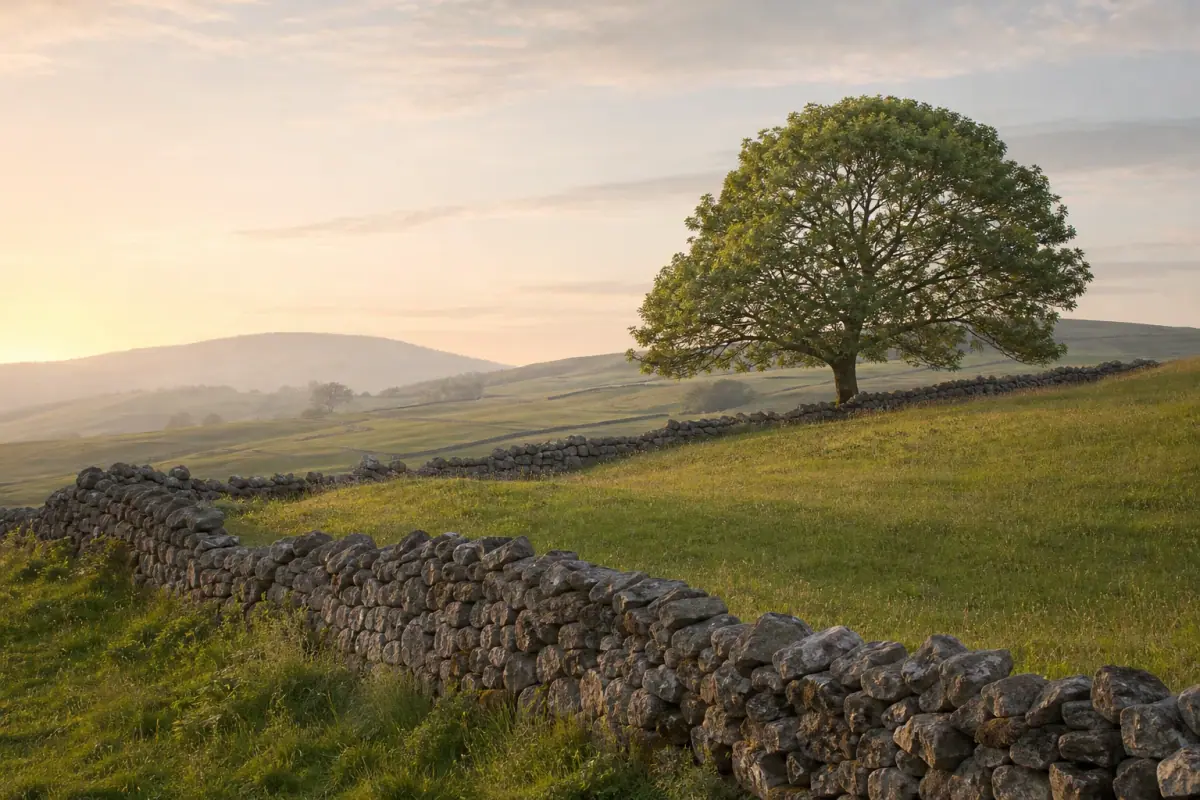
The cue card
Describe a quiet place in the countryside you have been to.
You should say:
- where it is
- how you got there
- what you did there
- and explain how being there made you feel
Rehearse the long turn
1 minute to prepare · 2 minutes to speak
A 60-second plan
- where it isfriend's grandparents' farm, Alentejo
- how you got theretrain to Évora; grandad's old pick-up
- what you did thereeggs, cork oaks, reservoir swim, stars
- and explain how being there made you feelsilence kept me awake, then calm
Sample answers
Band 6 sample answer
226 words · about 1:58 spoken at a Band 6 pace
I want to talk about a farm in the Alentejo, it is a big region in the south of Portugal. The farm is of my friend's grandparents. There are many cork trees and olive trees around, and the nearest village is twenty minutes far by car.
I went there last spring with my friend Inês. First we took a train from Lisbon to Évora, it took about ninety minutes. From the window I could see the city change into fields. Then her grandfather picked us with his old truck, and we drove on a small road without asphalt.
We did many things there. In the morning we gave food to the animals and we took the eggs from the chickens. After that we walked between the cork trees. Every tree has a number painted on it, and I learned it shows the year when they took the bark. In the afternoon we swam in a lake, and at night we watched the stars, there was so many of them.
At first I felt strange, because it was too quiet and I couldn't sleep in the first night. But after two or three days I became very relax. There was no signal for my phone, so I didn't use it, and I felt very calm. When I returned to Lisbon, the city was so noisy for me.
The mistakes that keep it at Band 6
- The farm is of my friend's grandparents should be The farm belongs to my friend's grandparents
- twenty minutes far by car should be twenty minutes away by car
- picked us with his old truck should be picked us up in his old truck
- a small road without asphalt should be a dirt road
- there was so many of them should be there were so many of them
- in the first night should be on the first night
- very relax should be very relaxed
Why this is Band 6, not Band 7
- Fluency and coherence
- Willing to extend and covers every bullet in order, including a change of feeling over the visit. Not Band 7 because the links are simple ("First", "Then", "After that", "But") and each activity is mentioned rather than described.
- Vocabulary
- Enough to tell the story ("region", "cork trees", "signal"), but some phrases are awkward: "a small road without asphalt" is a long way round a common word, and "twenty minutes far by car" uses the wrong adverb. Band 7 needs more precise vocabulary.
- Grammar
- Mixes simple and complex sentences, with frequent errors: "The farm is of my friend's grandparents" avoids the verb it needs, "picked us with" drops the particle, "there was so many of them" misses the agreement, and "very relax" uses the verb for the adjective. That is Band 6 accuracy.
Pronunciation is the fourth criterion; it is judged from your voice, so a written sample cannot show it.
Band 7 sample answer
270 words · about 2:05 spoken at a Band 7 pace
I'd like to describe a farm in the Alentejo, which is a large rural region in the south of Portugal. My friend Inês's grandparents live there, and it's really isolated: there's nothing around it except cork trees and olive trees, and the nearest village is about twenty minutes away by the car.
I went there last spring with Inês. We caught the train from Lisbon to Évora, which took around an hour and a half, and it was nice to watch the city slowly turn into countryside through the window. Then her grandfather came to pick us up in a very old truck, and we drove the last part on a dirt road.
We spent most of our time outdoors. In the mornings we helped to feed the animals and collect eggs, and then we usually went for long walks. I found out that the numbers painted on the cork trees show the year when the bark was last removed, which I'd never known before. In the afternoons we went swimming in a reservoir nearby, and in the evenings we sat outside and looked at the stars, which were incredible because there was no light pollution at all.
At first I actually felt a bit uncomfortable, because it was so quiet that I couldn't get to sleep on the first night. However, after a couple of days I started to really relax. I didn't look at my phone, mostly because there wasn't any signal, and I felt much calmer than usual. When I came back to Lisbon, everything seemed so noisy, and I realised how much I'd needed that break.
The slips
- by the car should be by car
Why this is Band 7, not Band 8
- Fluency and coherence
- Speaks at length without effort, with a clear journey and a change of feeling ("At first", "However", "When I came back"). Not Band 8 because the activities are listed in time order rather than chosen and described, so the place feels less vivid.
- Vocabulary
- Some less common, natural items ("really isolated", "light pollution", "turn into countryside", "how much I'd needed that break"). Band 8 would use more idiomatic and precise language for the landscape and the feelings.
- Grammar
- A good range of complex structures, mostly accurate: a passive ("the bark was last removed"), "so quiet that" for a result, past perfect ("I'd never known", "I'd needed"). One slip, "by the car", where the phrase takes no article.
Pronunciation is the fourth criterion; it is judged from your voice, so a written sample cannot show it.
Band 8 sample answer
287 words · about 1:59 spoken at a Band 8 pace
The quietest place I've ever stayed is a farm in the Alentejo, the big rural region in the south of Portugal. It belongs to the grandparents of my friend Inês, and it's surrounded by cork oaks and olive groves, with the nearest village a good twenty minutes away.
We went last spring. We took the train from Lisbon to Évora, which takes about an hour and a half, and watched the suburbs gradually give way to rolling fields. Her grandfather picked us up in a pick-up truck that was older than both of us combined, and the last stretch was a bumpy dirt track with nothing on it but a few sheep.
The days had a lovely slowness to them. We'd get up with the roosters, collect the eggs, and then wander through the cork trees. Each trunk has a number painted on it, which turns out to be the last digit of the year its bark was harvested; I'd lived in Portugal all my life and never known that. In the afternoons we swam in a reservoir nearby, and lunch somehow lasted until four. At night, with no streetlights for miles, the sky was so full of stars that the Milky Way looked almost like a cloud.
Oddly enough, the first thing I felt was restless. The silence was so complete that I couldn't sleep the first night; I kept waiting for a car or a siren. But by the third day something had shifted. I stopped checking my phone, partly because there was no signal, and I noticed I was breathing more slowly. When we got back to Lisbon, the city seemed deafening, and I've been trying to hold on to that feeling ever since.
Why this is Band 8, not Band 9
- Fluency and coherence
- Fluent and fully coherent, with the feelings developed as a change over time ("Oddly enough", "But by the third day") and an ending that links back to the city. Short of Band 9 only because the activities paragraph is a little long.
- Vocabulary
- Wide, precise and idiomatic: "give way to rolling fields", "older than both of us combined", "a lovely slowness", "something had shifted". Band 9 would show this flexibility in every sentence.
- Grammar
- A wide range used accurately: past perfect ("I'd lived in Portugal all my life", "something had shifted"), an absolute phrase ("with no streetlights for miles"), a present perfect continuous ("I've been trying"). No errors; the gap to Band 9 is the occasional safe structure.
Pronunciation is the fourth criterion; it is judged from your voice, so a written sample cannot show it.
Rounding-off questions
- Do people spend enough time in the countryside?
- Most city people don't, me included. It's not that they don't want to; trips take planning and usually a car. Even one weekend a season would probably do more for people's stress than another app.
- Is the countryside disappearing where you live?
- Around Lisbon, yes: farmland is being turned into housing estates and warehouses. In the Alentejo it's the opposite problem. The land is still there, but young people are leaving, so whole villages are emptying out.
Phrases worth reusing
give way to rolling fields
be replaced by gently hilly farmland
a good twenty minutes away
at least twenty minutes away
older than both of us combined
extremely old (said humorously)
something had shifted
my mood had changed
hold on to that feeling
keep that feeling for as long as possible
light pollution
artificial light that hides the night sky
Oddly enough
strangely, surprisingly
If the obvious answer doesn't fit
- A village where your grandparents or other relatives live
- A hiking trail, lake or hill you visited on a trip
- A tea estate, vineyard or farm stay you went to