Part 2 cue cardFood and diet
Describe a meal you enjoyed with other people
Food cards tempt people to recite a menu. Here the meal is only the setting: the marks come from "who you were with" and "why you enjoyed it", so the people, the conversation and one moment at the table deserve more time than the dishes.
- 1 minute to prepare
- Up to 2 minutes
- Samples at Band 6, 7 and 8
- Updated 20 October 2026
The cue card
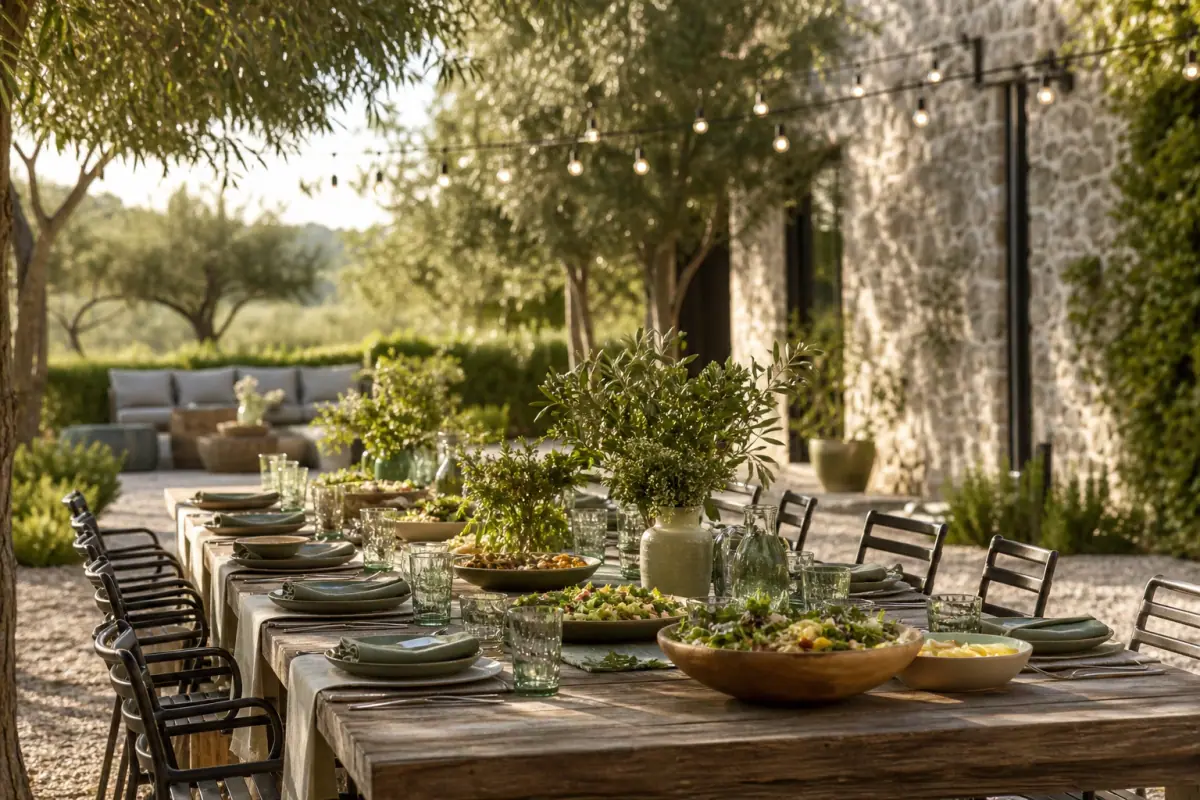
Describe a meal you enjoyed with other people.
You should say:
- what the meal was
- where you had it
- who you were with
- and explain why you enjoyed it
Rehearse the long turn
1 minute to prepare · 2 minutes to speak
A 60-second plan
- what the meal wasasado: ribs, chorizo, provoleta, cake
- where you had itMartín's family garden, Funes, near Rosario
- who you were withthree generations, two exchange students
- and explain why you enjoyed itfour-hour sobremesa, grandpa's dock stories
Sample answers
Band 6 sample answer
230 words · about 2:00 spoken at a Band 6 pace
I'm going to talk about a barbecue, in Argentina they call it asado, which I had last year when I was doing an exchange semester in Rosario. It was a very heavy meal with a big amount of meat. There was beef ribs, sausages called chorizo, and a grilled cheese called provoleta, and for dessert we had a cake with dulce de leche, which is like a sweet caramel.
We had it in the garden of my friend Martín's family. They live in a town called Funes, it's about thirty minutes from Rosario by car. His father cooked all the meat on a big grill made from bricks, and he started the fire since ten o'clock in the morning, so the lunch was ready at two.
There was maybe fifteen people. Martín's parents, his grandparents, some cousins, and also two other students from my course, one from Mexico and one from Germany.
I enjoyed it because the atmosphere was very warm. In Argentina after the meal people don't leave the table, they stay and talk for hours, they call this sobremesa. Martín's grandfather told us funny stories about when he was young and worked in the port, and everybody laughed a lot even if I didn't understand every words. I felt like a member of the family, not like a stranger, and I remember I didn't want to go home.
The mistakes that keep it at Band 6
- a big amount of meat should be a huge amount of meat
- There was beef ribs should be There were beef ribs
- started the fire since ten o'clock should be started the fire at ten o'clock
- There was maybe fifteen people should be There were maybe fifteen people
- even if I didn't understand should be even though I didn't understand
- every words should be every word
Why this is Band 6, not Band 7
- Fluency and coherence
- Willing to extend each bullet, and the last part has a clear point ("I felt like a member of the family"). It stays at Band 6 because ideas are chained with commas, as in "people don't leave the table, they stay and talk for hours, they call this sobremesa", and the grandfather's stories are mentioned but never told.
- Vocabulary
- Topic vocabulary is adequate and the local words are explained ("a grilled cheese called provoleta", "a big grill made from bricks"), but there are awkward choices: "a big amount of meat" is not the natural collocation. Band 7 would describe the atmosphere with something more precise than "very warm".
- Grammar
- Some complex sentences, but frequent errors: "There was beef ribs" and "There was maybe fifteen people" break agreement, "started the fire since ten o'clock" uses since for a point in time, and "every words" mixes singular and plural. That density is Band 6.
Pronunciation is the fourth criterion; it is judged from your voice, so a written sample cannot show it.
Band 7 sample answer
258 words · about 1:59 spoken at a Band 7 pace
The meal I'd like to describe is an asado I was invited to last year, while I was on an exchange semester in Rosario, in Argentina. An asado is basically a barbecue, but it's taken far more seriously than any barbecue I'd been to before: there were beef ribs, chorizo sausages, a slab of melted provolone cheese straight off the grill, and then a cake soaked in dulce de leche to finish.
We had it at the weekend house of my classmate Martín's family in Funes, a quiet town just outside the city. His dad had built the grill himself out of bricks in the garden, and he'd lit the fire at about ten, because apparently you can't rush the embers.
There were around fifteen of us altogether: Martín's parents, his grandparents, a crowd of cousins and two other exchange students from my course, a Mexican girl called Sofía and a guy from Hamburg.
What I enjoyed most wasn't the food, though, delicious as it was. It was what they call the sobremesa, which means staying at the table long after you've finished eating. We must have sat there for four hours. Martín's grandfather had worked at the docks during forty years, and he kept everyone in stitches with stories about the characters he'd met there. I only caught about half of the jokes, but it didn't matter. Nobody checked their phone, nobody was in a hurry, and for the first time since I'd arrived I felt like I was part of a family rather than a guest.
The slips
- during forty years should be for forty years
Why this is Band 7, not Band 8
- Fluency and coherence
- Speaks at length without effort and moves naturally from food to people ("What I enjoyed most wasn't the food, though, delicious as it was"). Not Band 8 because the third paragraph is a plain list of guests, and the grandfather's stories are summarised rather than brought to life.
- Vocabulary
- Some less common and idiomatic items: "kept everyone in stitches", "you can't rush the embers", "straight off the grill", "a crowd of cousins". Band 8 would sustain this range throughout; the closing feeling ("part of a family rather than a guest") is clear but conventional.
- Grammar
- A range of complex structures, mostly accurate: a concessive clause ("delicious as it was"), "must have sat" for a past guess, the past perfect for earlier events. One slip, "during forty years", where a length of time needs a different preposition; that occasional slip is Band 7.
Pronunciation is the fourth criterion; it is judged from your voice, so a written sample cannot show it.
Band 8 sample answer
268 words · about 1:51 spoken at a Band 8 pace
I'd like to talk about an Argentinian asado I was lucky enough to be invited to while I was studying in Rosario on an exchange. Calling it a barbecue doesn't really do it justice. It's a whole ritual: beef ribs that had been cooking slowly for hours, chorizo, morcilla, a disc of provolone that comes off the grill crisp outside and molten inside, and then, just when you think you can't possibly eat any more, a dulce de leche cake.
It was at my classmate Martín's family home in Funes, a leafy little town twenty minutes from the city. His father is the kind of man who treats the grill as sacred; he'd been tending the fire since mid-morning and wouldn't let anyone else near it.
There must have been fifteen people round the table: three generations of Martín's family, an assortment of cousins and partners, and two other exchange students who, like me, had no idea how much food was coming.
Why did I enjoy it so much? Partly the food, obviously, but mostly the sobremesa, the custom of lingering at the table for hours once the eating is over. Martín's grandfather, who spent forty years working on the docks, held court with stories about smugglers and dockside feuds, and his daughter kept rolling her eyes because she'd clearly heard every one a hundred times. My Spanish wasn't good enough to follow all of it, yet I've rarely felt so included. Nobody glanced at a phone, the light faded, someone fetched a guitar, and I realised I'd stopped feeling like a foreigner somewhere around the third story.
Why this is Band 8, not Band 9
- Fluency and coherence
- Fluent, coherent and well paced: the food is covered briskly and the time goes to the people, which is where this card's marks are. Short of Band 9 only because the rhetorical question ("Why did I enjoy it so much?") is a slightly mechanical way into the last bullet.
- Vocabulary
- Wide and precise: "doesn't really do it justice", "crisp outside and molten inside", "held court", "lingering at the table", "rolling her eyes". The gap to Band 9 is the odd general phrase, such as "an assortment of cousins and partners".
- Grammar
- Flexible and accurate: past perfect continuous ("had been cooking slowly for hours", "he'd been tending the fire"), a deduction ("There must have been"), relative clauses inside longer sentences. No errors; a few sentences are simpler than Band 9 would choose.
Pronunciation is the fourth criterion; it is judged from your voice, so a written sample cannot show it.
Rounding-off questions
- Is it important for families to eat together?
- I think so. It's often the only time everyone is in the same room without screens, and children pick up a lot just from listening to adults talk. Even a quick dinner a few times a week makes a difference.
- Are shared meals less common than before?
- In cities, probably yes. People work different hours and eat at their desks or on the go. But at weekends and during festivals, the big family meal seems to be holding on quite well.
Phrases worth reusing
kept everyone in stitches
made everyone laugh a great deal
straight off the grill
freshly cooked and served immediately
doesn't really do it justice
makes it sound less impressive than it is
held court
entertained a group as the centre of attention
lingering at the table
staying seated long after the meal has finished
lucky enough to be invited
fortunate to receive an invitation
delicious as it was
although it was delicious
If the obvious answer doesn't fit
- An iftar or festival meal shared with neighbours or colleagues
- A cheap street-food dinner with friends that turned into a long night
- The first time you cooked a whole meal for your family