Part 2 cue cardFood and diet
Describe a dish you know how to cook
The ingredients bullet is the trap: it turns into a shopping list read aloud. Fold the ingredients into what you do with them (soak, blend, simmer), and give "when you usually make it" one real occasion, not just "at weekends".
- 1 minute to prepare
- Up to 2 minutes
- Samples at Band 6, 7 and 8
- Updated 20 October 2026
The cue card
Describe a dish you know how to cook.
You should say:
- what the dish is
- how you learned to make it
- what ingredients it needs
- and explain when you usually make it
Rehearse the long turn
1 minute to prepare · 2 minutes to speak
A 60-second plan
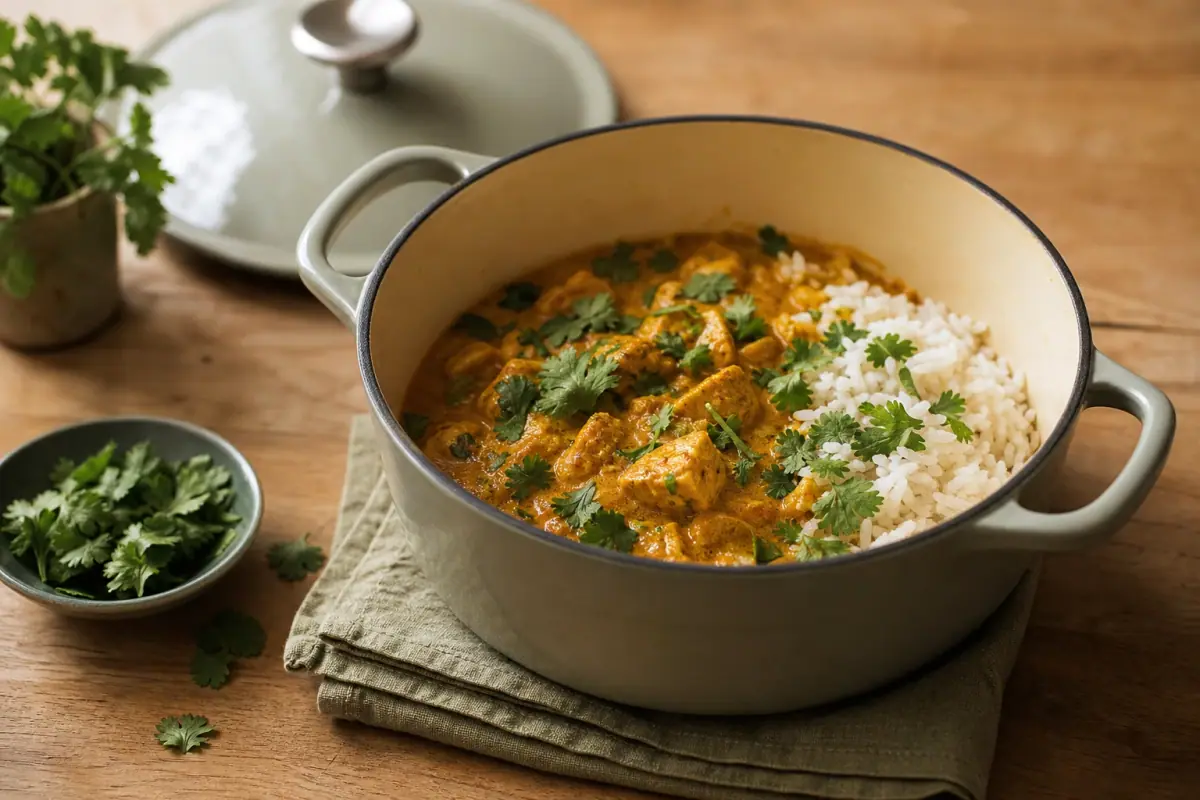
- what the dish isají de gallina, creamy Peruvian chicken
- how you learned to make itgrandma in Trujillo, summer at fifteen
- what ingredients it needsají amarillo, bread in milk, walnuts
- and explain when you usually make itDad's birthday; when cousins visit
Sample answers
Band 6 sample answer
218 words · about 1:54 spoken at a Band 6 pace
So, the dish I want to describe is ají de gallina. It's a very famous dish in Peru, my country, and it's basically a chicken in a creamy yellow sauce, and you eat it with rice and boiled potatoes.
I learned to make it from my grandmother. When I was fifteen, I stayed in her house in Trujillo for the summer holidays, and every Sunday she cooked this dish for whole family. At first I only watched, but after some weeks she let me to do everything by myself. She was very strict, she always said I put too much salt.
About the ingredients, you need chicken, of course, and a special yellow pepper which is called ají amarillo. It's not very spicy, it gives more the colour and the flavour. Then you need bread soaked in milk, some walnuts, onion, garlic and cheese. You blend the bread and the peppers together and you cook it slowly with the chicken until it become thick. On top you put a boiled egg and black olives.
Usually I make it when my cousins comes to visit, or for my father birthday in March, because it's his favourite. It takes a long time, maybe two hours, but everybody is very happy when they eat it, so I think it worth it.
The mistakes that keep it at Band 6
- basically a chicken should be basically chicken
- for whole family should be for the whole family
- let me to do everything should be let me do everything
- it gives more the colour should be it's there more for the colour
- until it become thick should be until it becomes thick
- my cousins comes to visit should be my cousins come to visit
- my father birthday should be my father's birthday
- I think it worth it should be I think it's worth it
Why this is Band 6, not Band 7
- Fluency and coherence
- Keeps going and covers all four bullets in order, using simple markers ("At first", "About the ingredients", "Usually"). It stays at Band 6 because the ingredients part becomes a list joined by "and" and "Then", so the answer loses the thread of the story about the grandmother.
- Vocabulary
- Enough topic words to make the dish clear ("soaked in milk", "boiled potatoes", "blend"), but some choices are awkward: "it gives more the colour" doesn't say what the speaker means, and "very strict" and "very happy" are the safe words a Band 7 speaker would replace.
- Grammar
- Tries complex forms, a relative clause and a time clause, but they break: "until it become thick" and "my cousins comes" lose the agreement, and "let me to do" uses an infinitive that let never takes. That frequency of errors in the harder sentences is Band 6.
Pronunciation is the fourth criterion; it is judged from your voice, so a written sample cannot show it.
Band 7 sample answer
251 words · about 1:56 spoken at a Band 7 pace
The dish I know how to cook best is ají de gallina, which is a Peruvian classic: shredded chicken in a thick, golden sauce that's mildly spicy and surprisingly creamy, served on rice with a couple of boiled potatoes.
I picked it up from my grandmother. The summer I turned fifteen I was sent to stay with her in Trujillo, and she'd make it every Sunday for the whole extended family, which meant cooking for about twelve people. For the first few weeks I was only allowed to peel and chop, but by August she was standing behind me and letting me take charge, while correcting me constantly, mostly about the salt.
The ingredient that really makes it is ají amarillo, a yellow chilli that's more fruity than hot. Apart from that, you need white bread soaked in evaporated milk, which is what thickens the sauce, plus onions, garlic, a handful of walnuts and some grated cheese. You blend the chillies with the bread, fry everything with the onions and then let it simmer with the chicken until it's rich enough for coating a spoon. It's finished with a halved egg and a few black olives.
These days I tend to make it on special occasions, because it takes a good two hours. My dad requests it every year for his birthday in March, and whenever my cousins come down from the north it's practically compulsory. It's a lot of effort, but seeing everybody go back for seconds makes it worthwhile.
The slips
- rich enough for coating a spoon should be rich enough to coat a spoon
Why this is Band 7, not Band 8
- Fluency and coherence
- Speaks at length with no strain and links the stages naturally ("For the first few weeks", "Apart from that", "These days"). Not Band 8 because the ingredients section, though well handled, still runs as a sequence of steps rather than being woven into the grandmother story.
- Vocabulary
- Precise cooking language ("let it simmer", "soaked in evaporated milk", "go back for seconds") and idiomatic touches like "I picked it up". A Band 8 speaker would show this range in every part of the answer, not mainly in the recipe.
- Grammar
- Complex sentences are frequent and mostly accurate: relative clauses, "she'd make it" for a past habit, a passive ("I was sent"). The one slip is "rich enough for coating a spoon", where enough needs an infinitive.
Pronunciation is the fourth criterion; it is judged from your voice, so a written sample cannot show it.
Band 8 sample answer
282 words · about 1:57 spoken at a Band 8 pace
I'd like to talk about ají de gallina, which is probably the most comforting thing I can cook. It's a Peruvian dish of pulled chicken in a velvety yellow sauce, gently spiced, and it's always served with white rice and boiled potatoes on the side.
I learned it from my grandmother, more or less by apprenticeship. When I was fifteen I spent a whole summer at her house in Trujillo, and Sunday lunch there was a serious operation: twelve or thirteen of us round one table. For the first month I was relegated to peeling potatoes, but she gradually handed over more of the process, and by the end of the holiday she'd sit at the table and supervise while I did everything, occasionally reaching over to add a pinch of salt without a word.
What gives the dish its character is ají amarillo, a yellow chilli that's fragrant rather than fiery. The sauce itself is thickened with bread that's been soaked in evaporated milk, then blended with the chillies, garlic and onion and enriched with ground walnuts and a little parmesan. The trick is to keep the heat low and stir patiently; if you rush it, it catches on the bottom of the pan. It's topped with a hard-boiled egg and a couple of black olives.
Because it's a labour of love, I save it for occasions. It's become a fixture of my father's birthday every March, and when my cousins come down from the north I'm expected to produce it the night they arrive. I suppose that's why I like making it: every time I do, I can hear my grandmother telling me to taste it before I salt it.
Why this is Band 8, not Band 9
- Fluency and coherence
- Effortless and well organised: each bullet has a scene, and the ending ties the dish back to the grandmother ("I can hear my grandmother telling me"). Band 9 would need slightly more varied linking than the familiar "I suppose" and "Because".
- Vocabulary
- Wide and exact: "relegated to peeling potatoes", "fragrant rather than fiery", "a labour of love", "catches on the bottom of the pan". The gap to Band 9 is that some ordinary stretches ("I save it for occasions") are correct but unremarkable.
- Grammar
- Flexible and accurate: a perfect passive ("that's been soaked"), a conditional ("if you rush it"), "she'd sit" for a past habit and a participle clause ("reaching over to add"). No errors; a Band 9 speaker would only add more variety in the closing lines.
Pronunciation is the fourth criterion; it is judged from your voice, so a written sample cannot show it.
Rounding-off questions
- Should young people learn to cook?
- Definitely. Even a few basic dishes save money and make people less dependent on takeaways, and I think cooking teaches patience in a way that very few school subjects do.
- Is home cooking being lost in modern life?
- To some extent, yes. With long working hours and delivery apps, a lot of families only cook properly at weekends. But I don't think it's disappearing; it's just becoming more of an occasion than a routine.
Phrases worth reusing
I picked it up from
I learned it informally, by watching and doing
a labour of love
hard work done for pleasure, not for reward
go back for seconds
take another helping because you enjoyed it
fragrant rather than fiery
it smells strong but isn't very hot
it's practically compulsory
people expect it and insist on it
become a fixture of
turned into a regular, expected part of something
let it simmer
cook it gently, just below boiling
If the obvious answer doesn't fit
- A simple everyday dish, like fried rice or an omelette, told with real detail
- Something you cooked once for a special occasion and now make regularly
- A dish you learned from a video and adapted to your family's taste