Part 2 cue cardGoals and the future
Describe a time you tried something for the first time
"How it went" needs a sequence with a change in it (at first, by the end), and "how you felt" should contrast before and after. The trap is summing it up as "it was fun", which leaves nothing for the second minute.
- 1 minute to prepare
- Up to 2 minutes
- Samples at Band 6, 7 and 8
- Updated 20 October 2026
The cue card
Describe a time you tried something for the first time.
You should say:
- what you tried
- why you decided to try it
- how it went
- and explain how you felt about it
Rehearse the long turn
1 minute to prepare · 2 minutes to speak
A 60-second plan
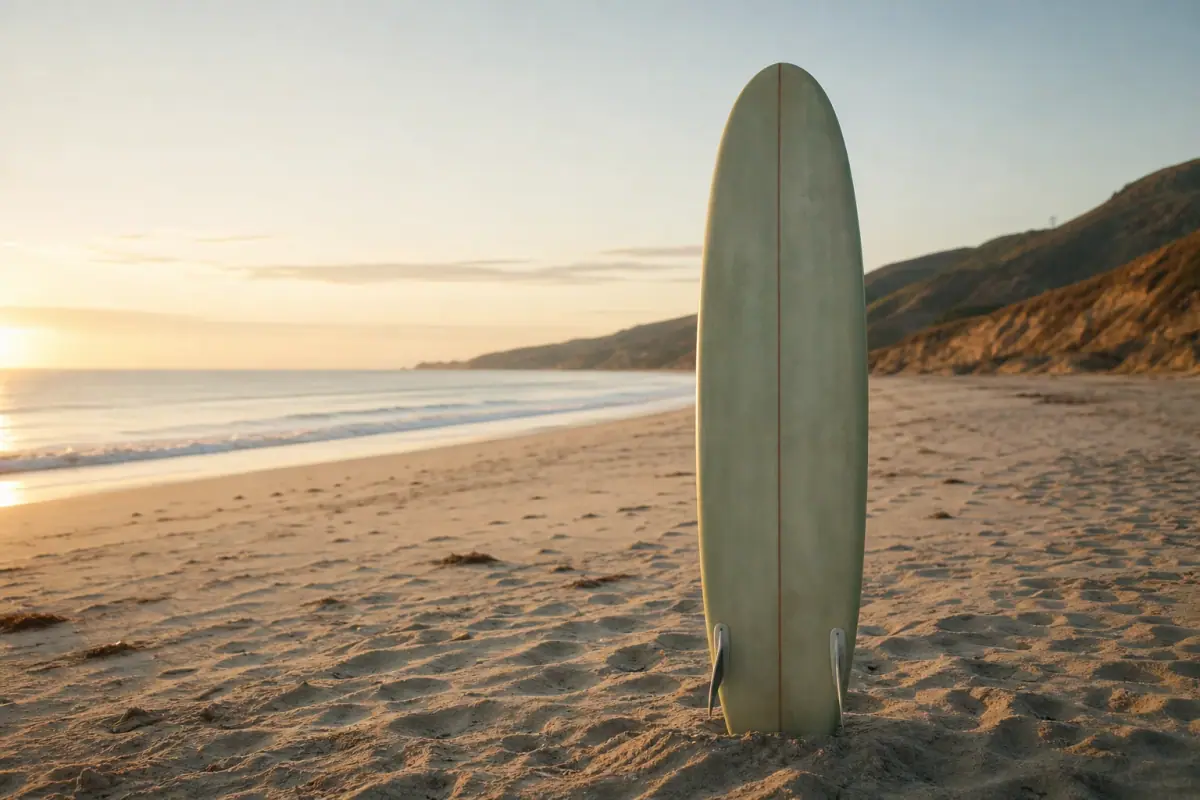
- what you triedsurfing, Taghazout, last August
- why you decided to try itcousin Yassine nagged for years; turned twenty
- how it wentfell twenty times; stood on last wave
- and explain how you felt about itterrified, then hooked; aching for days
Sample answers
Band 6 sample answer
218 words · about 1:54 spoken at a Band 6 pace
I'd like to talk about the first time I tried surfing. It was last August in Taghazout, which is a small village near Agadir, on the Atlantic coast of Morocco. It's very famous for surfers from all over the world.
The reason I tried it is my cousin Yassine. He is working as an instructor in a surf camp there, and for years he told me to come, but I always said no because I'm not a strong swimmer. Last summer I turned twenty, and I thought, if I don't try now, I will never do it. So I took the bus from Marrakech and I stayed with him for three days.
Honestly, at the beginning it was a disaster. The board was much more heavier than I expected, and the waves kept pushing me back to the beach. I think I fell down more than twenty times in the first morning. Yassine was laughing at me but he was also very patient. Finally on the last afternoon, I managed standing up for maybe five seconds, and everyone on the beach was clapping.
I felt very scared before, but after I was really excited. My whole body was hurting during three days, but I didn't care. Now I want to go back next summer and improve my skills.
The mistakes that keep it at Band 6
- very famous for surfers should be very popular with surfers
- He is working as an instructor should be He works as an instructor
- for years he told me to come should be for years he'd been telling me to come
- much more heavier should be much heavier
- twenty times in the first morning should be twenty times on the first morning
- I managed standing up should be I managed to stand up
- but after I was really excited should be but afterwards I was really excited
- hurting during three days should be hurting for three days
Why this is Band 6, not Band 7
- Fluency and coherence
- Willing and clear, with every bullet covered and a simple story shape ("at the beginning it was a disaster", "Finally"). It stays at Band 6 because the feelings bullet is rushed into two short sentences, and the ideas are mostly joined with "and" and "but".
- Vocabulary
- Enough vocabulary for the experience ("instructor", "surf camp", "strong swimmer"), but some choices are awkward: "very famous for surfers" mixes up two expressions, and "improve my skills" is a safe, generic phrase. Band 7 needs more precise, less common words.
- Grammar
- Attempts a range of tenses and a conditional, but slips in the harder forms: "much more heavier" doubles the comparative, "I managed standing up" uses the wrong verb pattern, and "for years he told me" needs a perfect form. That is Band 6.
Pronunciation is the fourth criterion; it is judged from your voice, so a written sample cannot show it.
Band 7 sample answer
247 words · about 1:54 spoken at a Band 7 pace
Something I tried for the first time recently was surfing. I'd watched it a hundred times on the beach in Taghazout, a little fishing village near Agadir that's become a magnet for surfers, but last August I finally got in the water myself.
The person responsible is my cousin Yassine, who teaches at a surf camp there. He'd been nagging me to come for years, and I'd always found an excuse, mostly because I'm not a confident swimmer. But I turned twenty last summer, and something about that birthday made me think I'd run out of excuses. So I booked a bus from Marrakech and spent three days with him.
The first morning was humbling, to put it mildly. The board was far heavier than it looks, and every time I tried to paddle out a wave would knock me straight back to the shore. I must have fallen off twenty times before lunch, and Yassine found the whole thing hilarious, although he never lost the patience with me. Then, on the last afternoon, something clicked. I caught a small wave, pushed myself up and actually stayed on my feet for about five seconds, and a couple of people on the beach even cheered.
Beforehand I'd been genuinely nervous, but by the end I was completely hooked. I was aching all over for days afterwards, and I didn't regret a second of it. I'm already planning to go back next summer, and this time for a week.
The slips
- never lost the patience with me should be never lost patience with me
Why this is Band 7, not Band 8
- Fluency and coherence
- Speaks at length without effort and the story has a clear arc, from "The first morning was humbling" to "something clicked". Not Band 8 because the transitions are effective but predictable ("So", "Then", "Beforehand"), and the last bullet is brief compared with the rest.
- Vocabulary
- Some less common and idiomatic items used well: "a magnet for surfers", "nagging me", "to put it mildly", "completely hooked". Band 8 would sustain this precision in the plainer sentences too, such as "pushed myself up".
- Grammar
- A good range of structures, mostly accurate: a past perfect continuous ("He'd been nagging me"), "would" for a repeated past action, a modal of deduction ("I must have fallen off"). One slip: "lost the patience", where patience takes no article.
Pronunciation is the fourth criterion; it is judged from your voice, so a written sample cannot show it.
Band 8 sample answer
266 words · about 1:50 spoken at a Band 8 pace
The first time I ever tried surfing was last August, in Taghazout, a fishing village just north of Agadir that's turned into something of a pilgrimage site for surfers. I'd spent whole afternoons there as a kid watching them, but I'd never once set foot on a board.
The push came from my cousin Yassine, who instructs at one of the surf camps. He'd been trying to talk me into it for years, and I'd always wriggled out of it, partly because I'm a fairly hesitant swimmer and partly, if I'm honest, because I didn't want to look ridiculous. Then I turned twenty, and it struck me that if I kept putting it off, I'd become the sort of person who never tries anything. So I caught the bus down from Marrakech for three days.
The first morning was a lesson in humility. The board was unwieldy, the paddling was exhausting, and the waves seemed to take a personal interest in flinging me back onto the sand. I lost count of how many times I wiped out, and Yassine, to his eternal amusement, filmed most of it. But on the final afternoon it all came together: I caught a modest wave, got to my feet and rode it for perhaps five glorious seconds before toppling off.
What I felt was a mixture of disbelief and pure elation, and a strange pride in having done something I'd been quietly afraid of. My shoulders ached for the best part of a week, but I came home with the bug. I'm already saving for a longer stay next summer.
Why this is Band 8, not Band 9
- Fluency and coherence
- Fluent and fully coherent, with the reasons developed honestly ("partly, if I'm honest") and a story that rises to its moment ("it all came together"). Band 9 would show slightly more variety in how the sections are introduced.
- Vocabulary
- Wide and idiomatic: "wriggled out of it", "a lesson in humility", "unwieldy", "wiped out", "came home with the bug". The gap to Band 9 is the occasional standard phrase, such as "pure elation", where something fresher was available.
- Grammar
- Flexible and accurate: a conditional inside reported thought ("if I kept putting it off, I'd become"), a past perfect continuous, a perfect gerund after a preposition ("in having done something"). No errors.
Pronunciation is the fourth criterion; it is judged from your voice, so a written sample cannot show it.
Rounding-off questions
- Why are some people afraid to try new things?
- Mostly fear of looking foolish, I think, more than fear of the thing itself. I was far more worried about people watching me fall off than about the waves.
- Is it important to step outside your comfort zone?
- Yes, within reason. You don't need to jump out of planes, but doing something slightly frightening now and then shows you're more capable than you assumed, and that confidence carries over into other things.
Phrases worth reusing
a magnet for surfers
a place that strongly attracts a particular group
to put it mildly
said gently, because the reality was worse
something clicked
suddenly I understood how to do it
completely hooked
so keen that I want to keep doing it
wriggled out of it
avoided doing it by making excuses
came home with the bug
returned with a strong new enthusiasm
a lesson in humility
an experience that made me feel less proud
If the obvious answer doesn't fit
- A food you'd always refused to eat, like snails, durian or raw fish
- Your first time performing, speaking in public or driving alone
- A first trip by plane, train or ferry, or a first night away from home